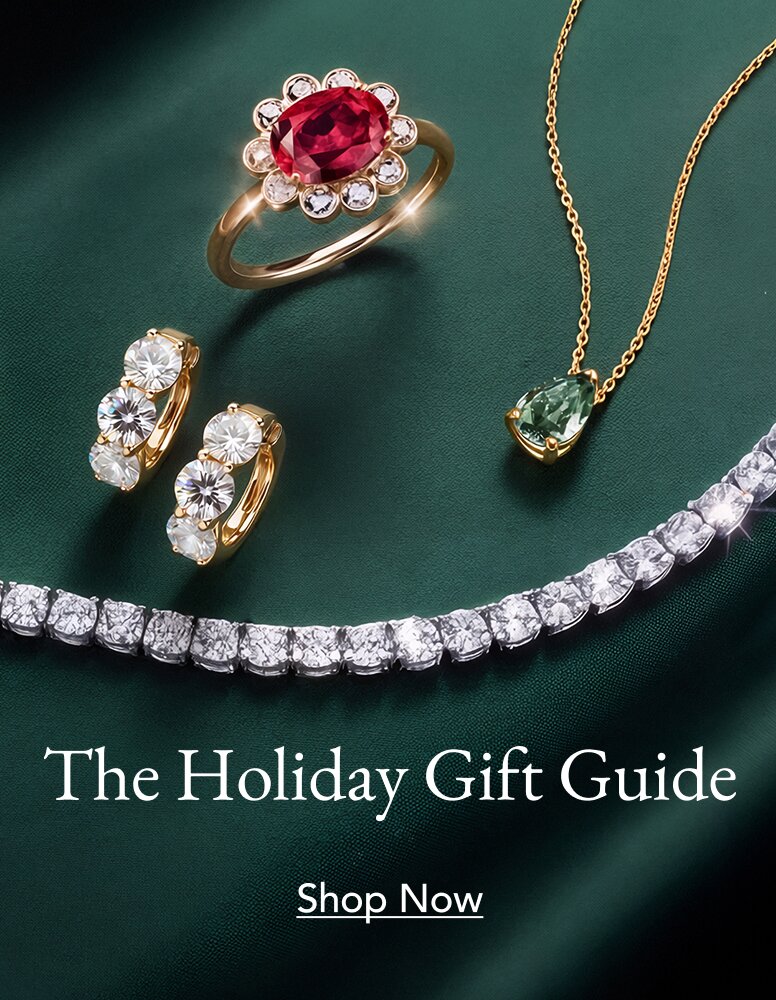
Pendant necklaces include solitaire and bezel pendants, medallions and lockets, station and charm styles, tennis and pavé pendants, and nature or symbol-inspired medallions. Each style offers a different focal size and silhouette to suit everyday wear or special occasions.
What metal options are available for pendant necklaces?
Pendant necklaces are available in platinum, 14K and 18K yellow gold, white gold, and rose gold, as well as sterling silver. Metal choices affect color and long term wear, so consider which tone coordinates best with your other jewelry.
What necklace lengths are available for pendant necklaces?
Common pendant chain lengths include 16 inches, 18 inches, 20 inches, and 24 inches, with many styles offering adjustable options. Shorter lengths sit higher on the neckline while longer chains create a layered or pendant-forward look.
How do I choose the right pendant size for my neckline?
Consider the neckline you plan to wear the pendant with and the pendant’s visual scale, with smaller pendants complementing higher necklines and larger styles working well with lower necklines. A Brilliant Earth jewelry specialist can help match pendant proportions to your typical outfits.
Can pendant necklaces be personalized or engraved?
Yes, many pendant styles such as medallions and lockets offer engraving or personalization options to add initials, dates, or a short message. Personalization is a popular way to make a pendant feel more meaningful.
Are pendant necklaces available with lab grown diamonds or gemstones?
Yes, pendant necklaces are offered with lab grown diamonds, natural diamonds, sapphires, emeralds, pearls, and other gemstones across many styles. Filter by gemstone type to explore options across solitaire, halo, and gemstone bezel pendants.
Which pendant necklace styles are best for layering?
Delicate solitaires, small medallions, station chains, and thin bar or charm pendants are ideal for layering because they maintain balance and avoid competing focal points. Choosing varied lengths and chain thicknesses helps create a cohesive layered look.
How do I choose a chain style for a pendant necklace?
Chain styles commonly paired with pendants include cable, box, curb, rope, and snake chains, each offering a different drape and strength. Select a chain thickness and clasp that support the pendant’s weight and match the overall aesthetic.
How do I choose a pendant necklace as a gift?
Look at the recipient’s preferred metal color, favorite gemstones, and typical jewelry scale, and consider an engravable medallion or a classic solitaire for a timeless choice. If you need tailored help, a Brilliant Earth jewelry specialist can assist with recommendations and personalization.
Which clasp types are available for pendant necklaces?
Pendant necklaces commonly use spring ring and lobster clasps, with some styles offering toggle or magnetic closures for ease of wear. All Brilliant Earth clasps are secure, and a Brilliant Earth jewelry specialist can advise if you prefer a particular clasp type.
Diamond cut should not be confused with shape. Shape refers to the general outward appearance of the diamond, not its reflective qualities. Brilliant Earth currently carries the following shapes:
Oval
Round
Marquise
Emerald
Cushion
Old Mine
Pear
Radiant
Princess
Asscher
Heart
Color
A diamond's color is a natural and permanent characteristic. Colorless diamonds allow more light to pass through than a colored diamond, creating more sparkle and fire.
Absolutely colorless or icy white. The highest color grade—extremely rare and most expensive.
Clarity
A diamond’s clarity refers to the presence of impurities on and within the stone. When a rough stone is extracted from carbon deep beneath the earth, tiny traces of natural elements are almost always trapped inside. These elements are called flaws or inclusions because they are formed naturally and are unique to each stone.
10x magnification
Flawless with no internal or external flaws. Extremely rare and valuable.
Cut
The cut refers to the angles and proportions of a diamond. The cut of a diamond—its depth and width, and the uniformity of the facets—determines its beauty. The skill with which a diamond is cut determines how well it reflects and refracts light.
Exquisite quality cut to create the optimal combination of brilliance and fire. Reflects nearly all light that enters the diamond.
Top 3% of diamond quality based on cut.
Carat
A carat is the unit used to measure a diamond's weight. One carat equals 200 milligrams or 0.2 grams. Although carat weight and the size of a diamond are related, the carat does not directly measure diamond size.
WITH PURCHASE OVER $1,000.
USE CODE STUDS IN CART.*